Long before the container, ships carried ballast—water, sand, or rock—to maintain stability. This ballast became a notorious vector for invasive species, transporting marine life across oceans. The container era seemed, at first, to solve this. However, it created a new, and in some ways more insidious, pathway for biological invasion.
We live in a world remade by a box. The standard shipping container, with its corrugated steel walls and utilitarian demeanor, is often celebrated for its economic genius. Yet, its influence extends far beyond the balance sheets of global trade. This simple rectangle is a powerful, silent arbiter, actively reshaping the very fabric of our natural ecosystems and cultural landscapes, leaving a complex legacy in its wake.
The Silent Stowaway: A Vector for Biological Invasion
Long before the container, ships carried ballast—water, sand, or rock—to maintain stability. This ballast became a notorious vector for invasive species, transporting marine life across oceans. The container era seemed, at first, to solve this. However, it created a new, and in some ways more insidious, pathway for biological invasion.
The modern container is not just a vessel for goods but for life itself. Insects, rodents, seeds, fungi, and bacteria hitchhike in the nooks of cargo pallets, within the soil of imported plants, or in the hidden corners of the containers themselves. The Asian gypsy moth, the red imported fire ant, and various pathogens have found global transit through this system. Unlike ballast water discharge, which primarily affects port ecosystems, container-borne invasives can be transported directly to the heart of a continent by truck or train before they are discovered.
This “biocontainment” crisis presents a monumental ecological challenge. Invasive species can outcompete native flora and fauna, devastate agriculture, and disrupt entire ecosystems. The container, in its mission to connect the world commercially, has inadvertently accelerated the homogenization of the planet’s biology, creating a quieter, more diffuse ecological crisis that runs parallel to its economic boom.
The Architecture of Flow: Remaking our Physical World
Culturally and physically, the container has redrawn the map. Port cities, once characterized by finger piers reaching into the water and dense warehouses, have been utterly transformed. The need for vast, flat land for container stacks and massive cranes pushed port activity to the urban periphery. City centers once bustling with dockworkers were left with abandoned industrial waterfronts, which have only recently been reincarnated as commercial and residential districts.
This logic of the container—the demand for space, speed, and standardization—has created a new global topography of “logistics spaces.” Giant, anonymous distribution centers now ring our cities, situated at the nexus of highway and rail networks. These are the cathedrals of modern consumption, the hidden geography that powers our e-commerce. The container has made this landscape universal; a logistics park in Ohio is functionally and aesthetically indistinguishable from one in Rotterdam or Shanghai. It is a form of architectural globalization, where the imperative of the supply chain overrides local character.
A Cultural Chameleon: From Symbol to Canvas
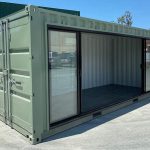
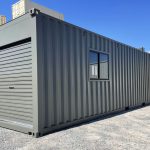
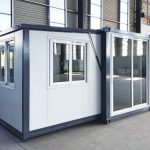
Paradoxically, while the container enforces standardization in logistics, it has become a symbol of immense cultural adaptability. Its afterlife as a building block for architecture is a powerful narrative of sustainability and ingenuity. From trendy pop-up shops and affordable housing solutions to entire student dormitories and art galleries, the retired container is a cultural chameleon.
It embodies a modern, industrial aesthetic that speaks to a culture of reuse and pragmatic innovation. Its modular nature allows for creative, scalable constructions that would have been unimaginable to its inventor, Malcom McLean. In this second life, the container is no longer a mere tool of global capital; it becomes a canvas for community, a statement of ecological consciousness, and a testament to human creativity repurposing the tools of industry.
Furthermore, the ubiquity of the container has cemented its place in our collective visual lexicon. It is a potent symbol in film and art, representing globalism, commerce, isolation, or journey. A stack of containers can evoke the immense, impersonal scale of the modern economy, while a single, repurposed one can tell a story of resourcefulness and new beginnings.
Conclusion: The Double-Edged Legacy
The shipping container, therefore, is far more than an economic tool. It is an ecological actor, an urban planner, and a cultural icon. Its legacy is profoundly double-edged. On one hand, it has connected humanity in unprecedented ways, fueling progress and innovation. On the other, it has accelerated the unintended consequences of that connection—ecological disruption, homogenized landscapes, and vulnerable, hyper-efficient systems.
To understand the container is to understand the central paradox of our time: the intertwined nature of progress and its price. It is a box that carries not just consumer goods, but the very seeds of environmental change and the blueprints for our built future. As we continue to navigate the world it has built, we must acknowledge the container not just as a facilitator of our desires, but as an active, powerful force shaping the planet we inhabit.
Your email address will not be published. Required fields are marked *
 English