The shipping container, therefore, is far more than a logistical tool. It is a philosophical artifact, a materialized idea that has become a blueprint for our world. It champions standardization over custom, abstraction over intimacy, and modular systems over organic wholes. It has built a world of unparalleled material wealth and connection, yet it has also constructed invisible walls that simplify, distance, and isolate.
 We have grown accustomed to the sight of them: stacked like monolithic bricks in ports, snaking behind locomotives, or lumbering past on the highway. The shipping container has become a visual constant, so ubiquitous as to be invisible. Yet, to dismiss it as a mere tool of logistics is to miss its profound essence. The shipping container is not just a box for moving goods; it is a powerful idea, a philosophical construct made of steel, that has fundamentally reshaped not only our landscapes but also our very cognition and social structures.
The Tyranny and Triumph of the Standard
At its core, the container is the ultimate symbol of standardization. Before its reign, the world of cargo was a chaotic, organic affair—a universe of irregular shapes, custom crates, and artisanal loading. The container imposed a ruthless, universal geometry upon this chaos. Its genius lies in its eight corner castings—the simple, reinforced cubes that allow a crane in Singapore to lift a box from a ship with the same effortless precision as a crane in Rotterdam. This enforced uniformity is a form of power. It compelled a global recalibration, forcing ships, trucks, trains, and ports to conform to its singular logic. The world had to become standardized to accommodate the box. This is a profound metaphor for modernity itself: the triumph of system over singularity, of interoperability over idiosyncrasy. It is a tyranny of efficiency, but one that unlocked previously unimaginable global connections.
The Black Box Society
Perhaps the most powerful cognitive shift the container has engineered is the principle of the “black box.” In systems theory, a black box is a device or system whose internal workings are unknown or irrelevant; only its inputs and outputs are significant. The shipping container is the physical apotheosis of this concept. Once the doors are sealed and the customs form is filed, the contents become abstract. A logistics manager in Germany doesn’t need to think about the ten thousand individual components inside a container from Malaysia; she only needs to know it is “Container MSCU 1234567,” destined for an assembly plant. The complexity, the culture, and the labor encapsulated within are rendered invisible, reduced to a barcode and a bill of lading.
This abstraction has enabled the management of a stupefyingly complex global economy. However, it also creates a moral and cognitive distance. We are disconnected from the origins and journeys of our goods. The story of the product—the hands that made it, the resources consumed—is hidden behind corrugated steel walls. We consume the output without engaging with the process, fostering a society that enjoys the fruits of globalization without confronting its complexities, its environmental costs, or its human realities.
The Architecture of Interconnection and Isolation
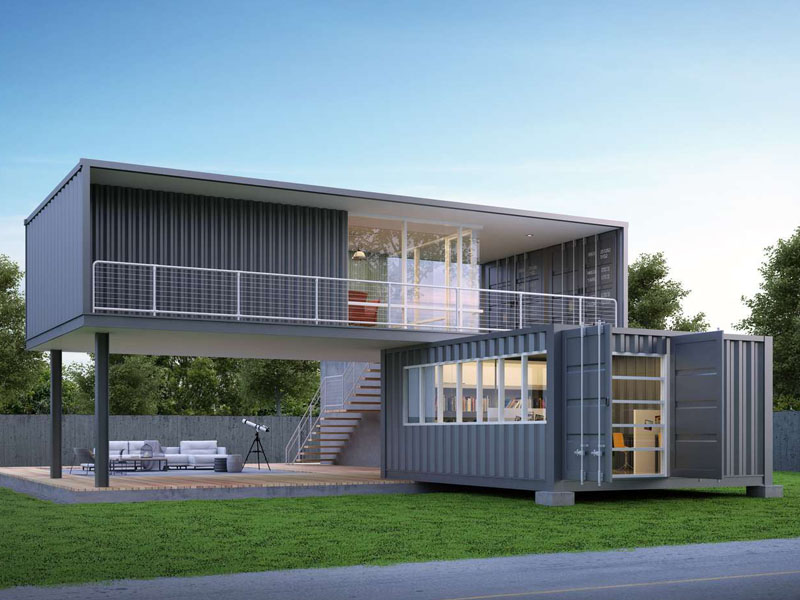
The container’s logic has bled from the realm of trade into the fabric of our social and urban lives. Its modularity—the way identical units can be stacked and combined to create larger structures—has become a dominant paradigm. We see this in the prefabricated towers that define modern skylines, in the server farms that host our cloud storage, and even in the organizational charts of our corporations, where standardized roles (“human resources”) are plugged into a larger system.
This modularity creates incredible flexibility and scalability, but it also promotes a certain kind of isolation. Just as a container on a ship is a self-contained unit, indifferent to its neighbors, our modern lives can feel increasingly “containerized.” We live in standardized housing units, work in modular office cubicles, and consume curated content streams delivered in digital “containers” (apps, feeds, playlists). The system facilitates connection at a macro level—the global network—while often eroding organic, granular connection at the micro level. We are all individual units, efficiently stacked within a vast, interconnected, yet strangely impersonal social and economic ship.
Conclusion: The Box We Live In
The shipping container, therefore, is far more than a logistical tool. It is a philosophical artifact, a materialized idea that has become a blueprint for our world. It champions standardization over custom, abstraction over intimacy, and modular systems over organic wholes. It has built a world of unparalleled material wealth and connection, yet it has also constructed invisible walls that simplify, distance, and isolate.
To understand the container is to understand the very architecture of our modern condition. It is the box in which our goods arrive, but it is also, metaphorically, a box we have all learned to think and live within. As we navigate the challenges of the 21st century—from supply chain fragility to social fragmentation—we must learn to see this box not just as a passive container, but as an active shaper of our reality. The future may depend on our ability to preserve the efficiency the container affords, while daring, once in a while, to open the doors and look inside at the complex, untidy, and human world it was designed to conceal.
Your email address will not be published. Required fields are marked *
 English