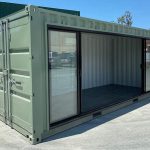
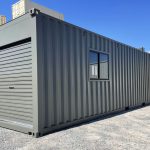
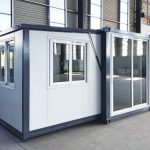
Finally, the concept of the container is being redefined beyond transportation. As with its retired cousins used for architecture, the container’s modularity is being applied to logistics itself. Pop-up “containerized” logistics hubs can be deployed rapidly to respond to disasters or market opportunities, bringing storage and distribution closer to the end-user.
If the first chapter of the shipping container’s story was about standardization and the second was about globalization, then the third chapter is unfolding today, defined by data, disruption, and a desperate search for resilience. The container itself, a corrugated steel box, remains deceptively simple. But its true identity has evolved; it is no longer just a container, but the fundamental unit of a vast, planetary-scale system. It is the physical internet, and understanding its present and future is to understand the fate of our interconnected world.
The Triumph of Intermodalism: A Seamless System
The initial genius of the shipping container was its facilitation of intermodalism—the ability to move goods across ships, trucks, and trains without ever opening the box. This created a seamless, integrated transportation network. The container became a universal currency of cargo. A complex global infrastructure grew around its dimensions: gantry cranes with jaws wide enough to embrace a 40-foot box, container ships so large they can block canals, and port terminals that resemble sprawling, metallic metropolises. This system, honed over decades, achieved a level of efficiency that made “just-in-time” manufacturing possible. A car factory in Germany could rely on parts from Thailand arriving with the precision of a Swiss watch, minimizing inventory costs and maximizing profit. For decades, the story was one of continuous optimization, pushing for lower costs, faster transit times, and ever-greater scale.
The Cracks in the Box: A System Under Stress
However, the very efficiency of this hyper-optimized system has revealed its profound vulnerabilities. The COVID-19 pandemic was a stark stress test. Factory closures, port shutdowns, and labor shortages created a domino effect. The system’s reliance on perfect synchronization meant that a single blockage, like the Ever Given in the Suez Canal, could snarl global trade for weeks. The result was port congestion, a staggering spike in shipping costs, and empty shelves for consumers. The world learned that the smooth flow of containers was not a given.
These disruptions exposed deeper issues. The pursuit of low cost had concentrated manufacturing in specific regions, creating chokepoints. Furthermore, the environmental cost of this mammoth network came into sharp focus. The shipping industry is a significant contributor to greenhouse gas emissions and local air pollution around ports. The humble container, in its relentless movement, was revealed to be both the lifeblood of the global economy and a potential vector of its instability.
The Fourth Chapter: The Rise of the Intelligent Container
In response to these challenges, the next evolution of the container is underway: the transition from a dumb box to an intelligent, connected node in a digital network. The container of the future is being fitted with a suite of sensors, transforming it from a sealed black box into a transparent, data-rich asset.
These Smart Containers can now continuously monitor and transmit a wealth of information in real-time:
Location and Integrity: Beyond simple GPS, they can detect if the container has been tampered with or if its doors have been opened unauthorized.
Internal Condition: Sensors track temperature, humidity, and atmospheric composition, critical for perishable goods like food and pharmaceuticals.
Shock and Tilt: They record any impacts or careless handling, providing invaluable data for insurance claims and supply chain quality control.
This real-time data creates a “digital twin” of the physical shipment, allowing logistics managers to have unprecedented visibility and predictive capability. They can pre-emptively reroute shipments around port delays, optimize energy use in refrigerated units, and automatically trigger payments upon verified delivery.
The Future: Resilience, Responsibility, and Redefinition
The future of the container system will be shaped by the lessons of its recent fragility. The goal is shifting from mere efficiency to resilience. This means diversifying supply chains, nearshoring some production, and building in redundancy—concepts that were once anathema to the just-in-time model.
Simultaneously, the push for sustainability is gaining momentum. The next generation of container ships is being designed to run on alternative fuels like green methanol or LNG. Ports are investing in shore-side electricity to eliminate emissions from idling vessels. There is even research into “sail-assist” technology and hull designs that reduce fuel consumption. The container itself is part of this cycle, with its robust steel frame making it highly reusable and recyclable, a model of circular economy principles.
Finally, the concept of the container is being redefined beyond transportation. As with its retired cousins used for architecture, the container’s modularity is being applied to logistics itself. Pop-up “containerized” logistics hubs can be deployed rapidly to respond to disasters or market opportunities, bringing storage and distribution closer to the end-user.
In conclusion, the shipping container’s journey is far from over. It began as a simple tool for efficiency, became the symbol of globalization, and is now maturing into a connected, intelligent component of a system learning to balance speed with stability. It is a mirror reflecting our ambitions for a connected planet and our anxieties about its dependencies. As it continues to evolve, this unassuming steel box will remain at the heart of our efforts to build a global economy that is not only efficient but also resilient, transparent, and sustainable. The box that built our world is now learning to help it adapt and survive.
Your email address will not be published. Required fields are marked *
 English