作者归档:jzxadmin

Case 05

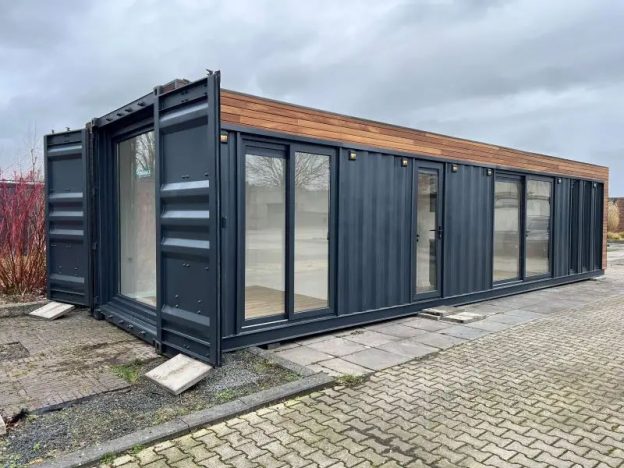
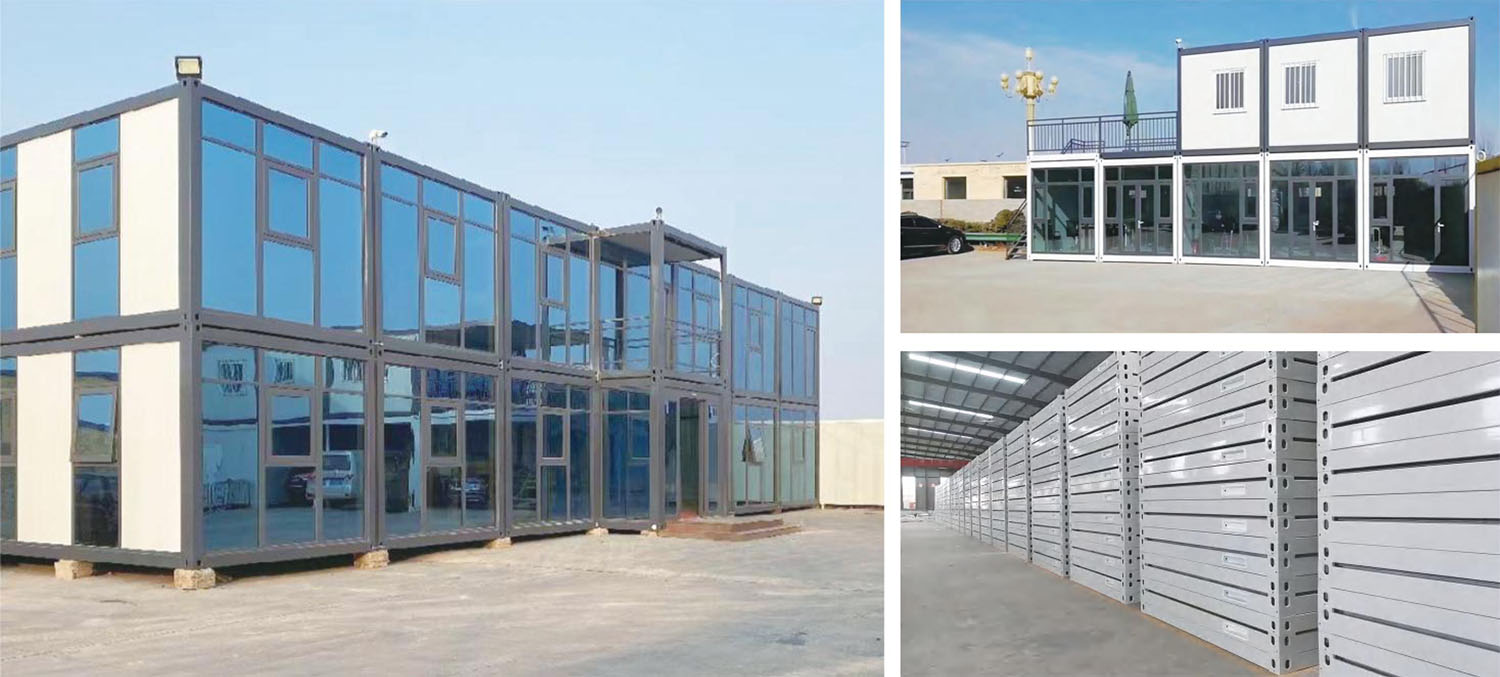
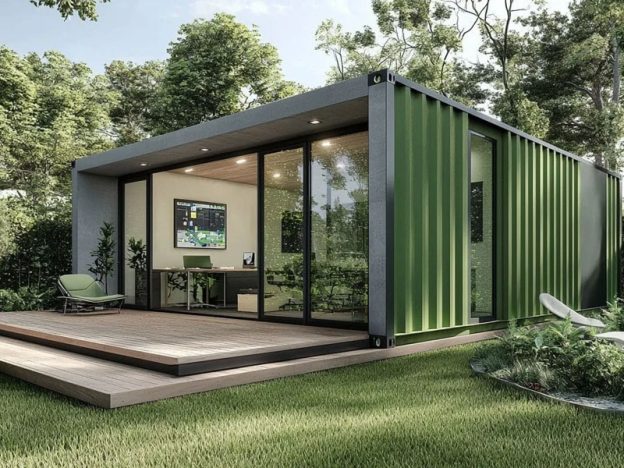
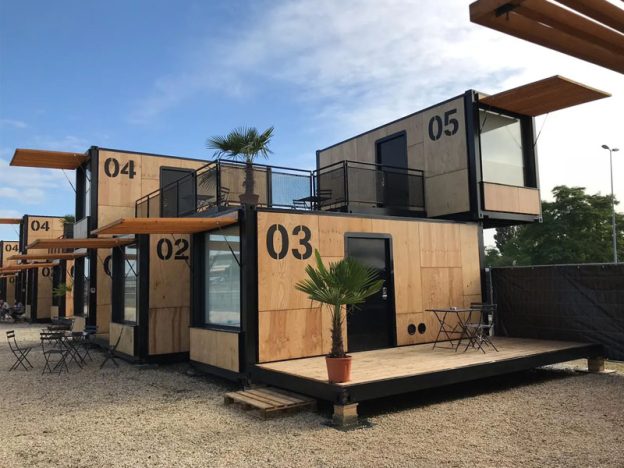
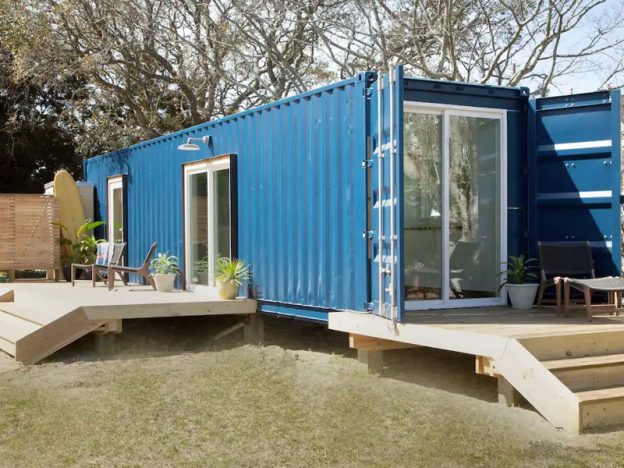
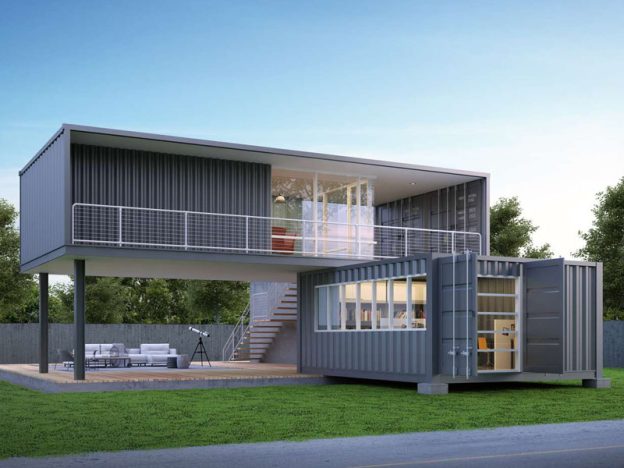
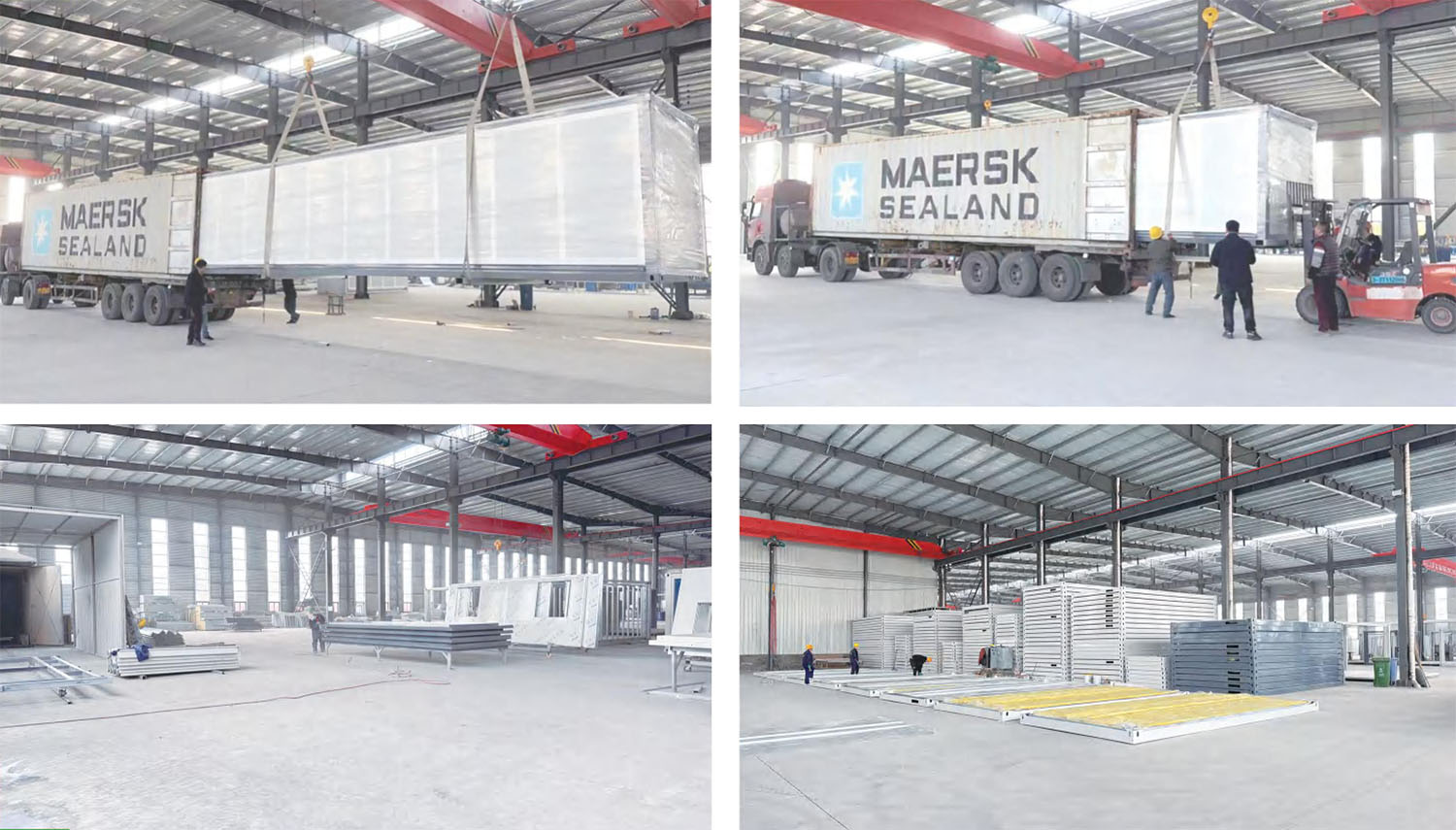
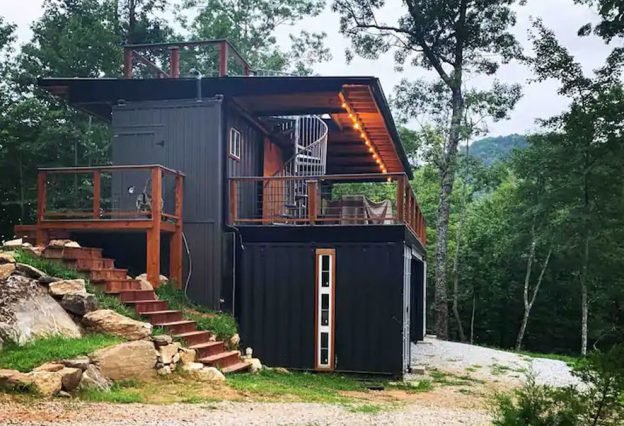
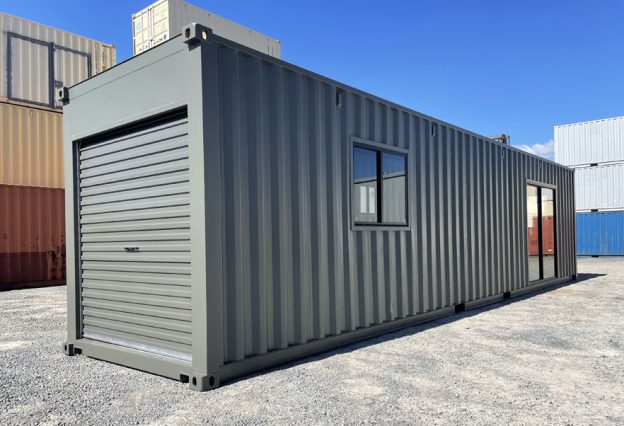
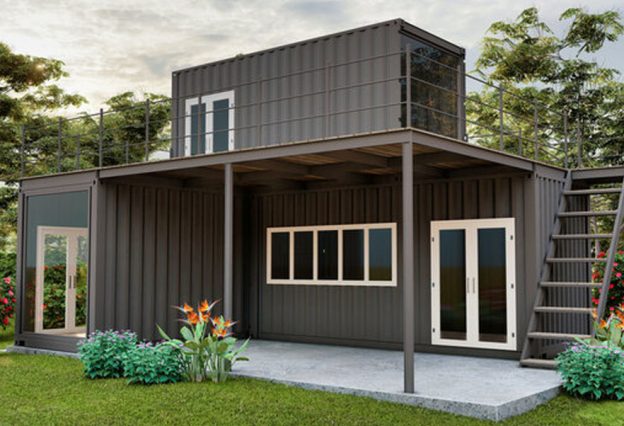
The packed box house has simple and safe strucure and low requirements for foundation. It has the characteristics of fast installation, convenientmovement and relocation, many turover times and long service ife. The modifed products are disassembled without loss and construction waste, tcan be used as a large space for ofice, accommodation, restaurant, bathroom, entertainment and combinalion, and can meet the reouirements ofconslruction enaineering camp, municial temporary house, feld operalion camp The demand for emergency resellement houses. schoolshospitals,tourist stations and various commercial houses

Case 04

The packed box house has simple and safe strucure and low requirements for foundation. It has the characteristics of fast installation, convenientmovement and relocation, many turover times and long service ife. The modifed products are disassembled without loss and construction waste, tcan be used as a large space for ofice, accommodation, restaurant, bathroom, entertainment and combinalion, and can meet the reouirements ofconslruction enaineering camp, municial temporary house, feld operalion camp The demand for emergency resellement houses. schoolshospitals,tourist stations and various commercial houses

Case 03

The packed box house has simple and safe strucure and low requirements for foundation. It has the characteristics of fast installation, convenientmovement and relocation, many turover times and long service ife. The modifed products are disassembled without loss and construction waste, tcan be used as a large space for ofice, accommodation, restaurant, bathroom, entertainment and combinalion, and can meet the reouirements ofconslruction enaineering camp, municial temporary house, feld operalion camp The demand for emergency resellement houses. schoolshospitals,tourist stations and various commercial houses

Case 02

The packed box house has simple and safe strucure and low requirements for foundation. It has the characteristics of fast installation, convenientmovement and relocation, many turover times and long service ife. The modifed products are disassembled without loss and construction waste, tcan be used as a large space for ofice, accommodation, restaurant, bathroom, entertainment and combinalion, and can meet the reouirements ofconslruction enaineering camp, municial temporary house, feld operalion camp The demand for emergency resellement houses. schoolshospitals,tourist stations and various commercial houses

Case 01

The packed box house has simple and safe strucure and low requirements for foundation. It has the characteristics of fast installation, convenientmovement and relocation, many turover times and long service ife. The modifed products are disassembled without loss and construction waste, tcan be used as a large space for ofice, accommodation, restaurant, bathroom, entertainment and combinalion, and can meet the reouirements ofconslruction enaineering camp, municial temporary house, feld operalion camp The demand for emergency resellement houses. schoolshospitals,tourist stations and various commercial houses

The Philosopher’s Box: How the Container Reshapes Our World and Mind

We have grown accustomed to the sight of them: stacked like monolithic bricks in ports, snaking behind locomotives, or lumbering past on the highway. The shipping container has become a visual constant, so ubiquitous as to be invisible. Yet, to dismiss it as a mere tool of logistics is to miss its profound essence. The shipping container is not just a box for moving goods; it is a powerful idea, a philosophical construct made of steel, that has fundamentally reshaped not only our landscapes but also our very cognition and social structures.

The Tyranny and Triumph of the Standard

At its core, the container is the ultimate symbol of standardization. Before its reign, the world of cargo was a chaotic, organic affair—a universe of irregular shapes, custom crates, and artisanal loading. The container imposed a ruthless, universal geometry upon this chaos. Its genius lies in its eight corner castings—the simple, reinforced cubes that allow a crane in Singapore to lift a box from a ship with the same effortless precision as a crane in Rotterdam. This enforced uniformity is a form of power. It compelled a global recalibration, forcing ships, trucks, trains, and ports to conform to its singular logic. The world had to become standardized to accommodate the box. This is a profound metaphor for modernity itself: the triumph of system over singularity, of interoperability over idiosyncrasy. It is a tyranny of efficiency, but one that unlocked previously unimaginable global connections.

The Black Box Society

Perhaps the most powerful cognitive shift the container has engineered is the principle of the “black box.” In systems theory, a black box is a device or system whose internal workings are unknown or irrelevant; only its inputs and outputs are significant. The shipping container is the physical apotheosis of this concept. Once the doors are sealed and the customs form is filed, the contents become abstract. A logistics manager in Germany doesn’t need to think about the ten thousand individual components inside a container from Malaysia; she only needs to know it is “Container MSCU 1234567,” destined for an assembly plant. The complexity, the culture, and the labor encapsulated within are rendered invisible, reduced to a barcode and a bill of lading.

This abstraction has enabled the management of a stupefyingly complex global economy. However, it also creates a moral and cognitive distance. We are disconnected from the origins and journeys of our goods. The story of the product—the hands that made it, the resources consumed—is hidden behind corrugated steel walls. We consume the output without engaging with the process, fostering a society that enjoys the fruits of globalization without confronting its complexities, its environmental costs, or its human realities.

The Architecture of Interconnection and Isolation

The container’s logic has bled from the realm of trade into the fabric of our social and urban lives. Its modularity—the way identical units can be stacked and combined to create larger structures—has become a dominant paradigm. We see this in the prefabricated towers that define modern skylines, in the server farms that host our cloud storage, and even in the organizational charts of our corporations, where standardized roles (“human resources”) are plugged into a larger system.

This modularity creates incredible flexibility and scalability, but it also promotes a certain kind of isolation. Just as a container on a ship is a self-contained unit, indifferent to its neighbors, our modern lives can feel increasingly “containerized.” We live in standardized housing units, work in modular office cubicles, and consume curated content streams delivered in digital “containers” (apps, feeds, playlists). The system facilitates connection at a macro level—the global network—while often eroding organic, granular connection at the micro level. We are all individual units, efficiently stacked within a vast, interconnected, yet strangely impersonal social and economic ship.

Conclusion: The Box We Live In

The shipping container, therefore, is far more than a logistical tool. It is a philosophical artifact, a materialized idea that has become a blueprint for our world. It champions standardization over custom, abstraction over intimacy, and modular systems over organic wholes. It has built a world of unparalleled material wealth and connection, yet it has also constructed invisible walls that simplify, distance, and isolate.

To understand the container is to understand the very architecture of our modern condition. It is the box in which our goods arrive, but it is also, metaphorically, a box we have all learned to think and live within. As we navigate the challenges of the 21st century—from supply chain fragility to social fragmentation—we must learn to see this box not just as a passive container, but as an active shaper of our reality. The future may depend on our ability to preserve the efficiency the container affords, while daring, once in a while, to open the doors and look inside at the complex, untidy, and human world it was designed to conceal.

The Invisible Foundation: The Container as the Bedrock of Modern Civilization

We often measure civilizations by their most visible monuments: the pyramids of Egypt, the aqueducts of Rome, the soaring cathedrals of Europe. These structures stand as testaments to human ambition and engineering prowess. For our globalized, modern age, however, the most defining monument is not a static edifice but a dynamic, ubiquitous, and profoundly simple object: the shipping container. Its greatness lies not in its form, but in its function as the invisible foundation upon which our contemporary way of life is built.

Unlike the celebrated infrastructures of the past, the container’s power is in its deliberate anonymity. It is designed to be overlooked, a uniform, corrugated steel box that fades into the background of ports, trains, and highways. This very invisibility is its triumph. It has become so deeply embedded in the logistics of our daily existence that we no longer see it, much as we no longer consciously notice the electrical grid or the internet’s protocols. Yet, its influence is more immediate and tangible than either. The device you are reading this on, the clothes you wear, the food in your pantry—virtually all of it likely spent time inside one of these sealed metal boxes. The container is the unsung hero of our material world, the primary vessel enabling the miracle of global abundance that we now take for granted.

The true revolution of the container was not the box itself, but the system of absolute standardization it imposed. Malcom McLean’s vision extended beyond a mere shipping method; it was a radical exercise in creating a universal language of physical objects. By dictating precise dimensions, corner castings, and lifting mechanisms, he forged a global protocol for matter, as transformative in its own realm as the TCP/IP protocol was for data. This standardization forced the entire world to adapt. Ships, cranes, trucks, trains, and port facilities were all radically redesigned or built from the ground up to serve this new master. The container didn’t just fit into the existing world; it compelled the world to reshape itself around its own logic, creating a seamless, planet-spanning machine for moving goods.

This physical internet has fundamentally altered our perception of space, time, and distance. The geographical constraints that once dictated economies have been dramatically reduced. It is now logistically straightforward and economically viable for a single product to be assembled from components sourced across a dozen countries, with each leg of its journey facilitated by the humble container. This has led to an unprecedented decentralization of production and a concentration of consumption. We enjoy a year-round cornucopia of goods, a permanent global summer in our supermarkets and shopping malls, all made possible by the relentless, silent journey of these boxes. Our expectation for instant availability and limitless variety is a direct consequence of the container’s logistical prowess.

However, a foundation that is taken for granted is a foundation whose cracks go unnoticed. The COVID-19 pandemic served as a brutal stress test, revealing the fragility embedded within this hyper-efficient system. When the flow of containers was disrupted, the entire edifice of just-in-time manufacturing and seamless delivery shuddered. The world witnessed empty shelves, factory shutdowns, and economic paralysis. This was a stark reminder that our complex civilization, with all its digital sophistication and financial leverage, rests upon a physical substrate of ships, ports, and boxes. When that substrate fails, the virtual world cannot compensate. The container, in its sudden scarcity, transformed from an invisible tool into a visible crisis, proving that the bedrock of our modern world is not as solid as we had assumed.

In conclusion, the shipping container is the quintessential infrastructure of the 21st century. It lacks the grandeur of ancient wonders, but its impact is arguably more profound. It is the great enabler of globalization, the architect of our consumer landscape, and the silent governor of a rebuilt world. To understand the container is to understand the hidden mechanics of our daily lives. It is a physical manifestation of the trade, interconnection, and vulnerability that define our era. As it continues to stack up in ports and traverse the oceans, it carries within it not just cargo, but the very structure of our modern civilization—a civilization built, quite literally, inside a box.

The Unassuming Arbiter: How the Shipping Container Reshapes Ecology and Culture

We live in a world remade by a box. The standard shipping container, with its corrugated steel walls and utilitarian demeanor, is often celebrated for its economic genius. Yet, its influence extends far beyond the balance sheets of global trade. This simple rectangle is a powerful, silent arbiter, actively reshaping the very fabric of our natural ecosystems and cultural landscapes, leaving a complex legacy in its wake.

The Silent Stowaway: A Vector for Biological Invasion

Long before the container, ships carried ballast—water, sand, or rock—to maintain stability. This ballast became a notorious vector for invasive species, transporting marine life across oceans. The container era seemed, at first, to solve this. However, it created a new, and in some ways more insidious, pathway for biological invasion.

The modern container is not just a vessel for goods but for life itself. Insects, rodents, seeds, fungi, and bacteria hitchhike in the nooks of cargo pallets, within the soil of imported plants, or in the hidden corners of the containers themselves. The Asian gypsy moth, the red imported fire ant, and various pathogens have found global transit through this system. Unlike ballast water discharge, which primarily affects port ecosystems, container-borne invasives can be transported directly to the heart of a continent by truck or train before they are discovered.

This “biocontainment” crisis presents a monumental ecological challenge. Invasive species can outcompete native flora and fauna, devastate agriculture, and disrupt entire ecosystems. The container, in its mission to connect the world commercially, has inadvertently accelerated the homogenization of the planet’s biology, creating a quieter, more diffuse ecological crisis that runs parallel to its economic boom.

The Architecture of Flow: Remaking our Physical World

Culturally and physically, the container has redrawn the map. Port cities, once characterized by finger piers reaching into the water and dense warehouses, have been utterly transformed. The need for vast, flat land for container stacks and massive cranes pushed port activity to the urban periphery. City centers once bustling with dockworkers were left with abandoned industrial waterfronts, which have only recently been reincarnated as commercial and residential districts.

This logic of the container—the demand for space, speed, and standardization—has created a new global topography of “logistics spaces.” Giant, anonymous distribution centers now ring our cities, situated at the nexus of highway and rail networks. These are the cathedrals of modern consumption, the hidden geography that powers our e-commerce. The container has made this landscape universal; a logistics park in Ohio is functionally and aesthetically indistinguishable from one in Rotterdam or Shanghai. It is a form of architectural globalization, where the imperative of the supply chain overrides local character.

A Cultural Chameleon: From Symbol to Canvas

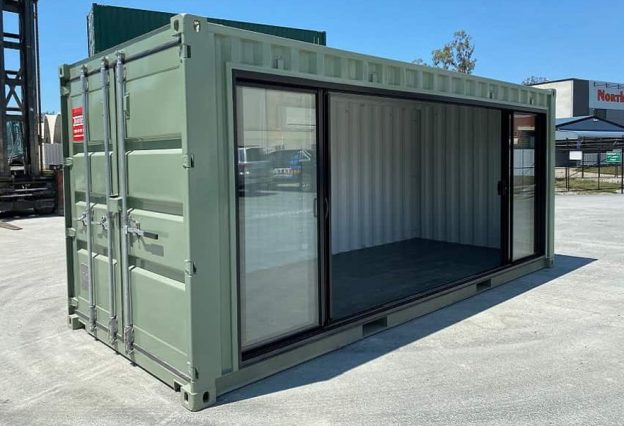
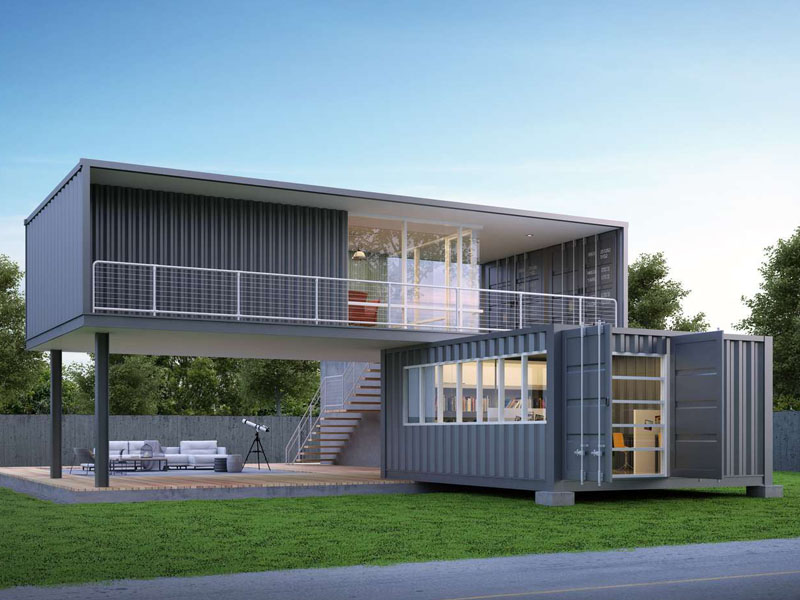
Paradoxically, while the container enforces standardization in logistics, it has become a symbol of immense cultural adaptability. Its afterlife as a building block for architecture is a powerful narrative of sustainability and ingenuity. From trendy pop-up shops and affordable housing solutions to entire student dormitories and art galleries, the retired container is a cultural chameleon.

It embodies a modern, industrial aesthetic that speaks to a culture of reuse and pragmatic innovation. Its modular nature allows for creative, scalable constructions that would have been unimaginable to its inventor, Malcom McLean. In this second life, the container is no longer a mere tool of global capital; it becomes a canvas for community, a statement of ecological consciousness, and a testament to human creativity repurposing the tools of industry.

Furthermore, the ubiquity of the container has cemented its place in our collective visual lexicon. It is a potent symbol in film and art, representing globalism, commerce, isolation, or journey. A stack of containers can evoke the immense, impersonal scale of the modern economy, while a single, repurposed one can tell a story of resourcefulness and new beginnings.

Conclusion: The Double-Edged Legacy

The shipping container, therefore, is far more than an economic tool. It is an ecological actor, an urban planner, and a cultural icon. Its legacy is profoundly double-edged. On one hand, it has connected humanity in unprecedented ways, fueling progress and innovation. On the other, it has accelerated the unintended consequences of that connection—ecological disruption, homogenized landscapes, and vulnerable, hyper-efficient systems.

To understand the container is to understand the central paradox of our time: the intertwined nature of progress and its price. It is a box that carries not just consumer goods, but the very seeds of environmental change and the blueprints for our built future. As we continue to navigate the world it has built, we must acknowledge the container not just as a facilitator of our desires, but as an active, powerful force shaping the planet we inhabit.

The Box That Builds Our World: From Intermodalism to Intelligent Logistics

If the first chapter of the shipping container’s story was about standardization and the second was about globalization, then the third chapter is unfolding today, defined by data, disruption, and a desperate search for resilience. The container itself, a corrugated steel box, remains deceptively simple. But its true identity has evolved; it is no longer just a container, but the fundamental unit of a vast, planetary-scale system. It is the physical internet, and understanding its present and future is to understand the fate of our interconnected world.

The Triumph of Intermodalism: A Seamless System

The initial genius of the shipping container was its facilitation of intermodalism—the ability to move goods across ships, trucks, and trains without ever opening the box. This created a seamless, integrated transportation network. The container became a universal currency of cargo. A complex global infrastructure grew around its dimensions: gantry cranes with jaws wide enough to embrace a 40-foot box, container ships so large they can block canals, and port terminals that resemble sprawling, metallic metropolises. This system, honed over decades, achieved a level of efficiency that made “just-in-time” manufacturing possible. A car factory in Germany could rely on parts from Thailand arriving with the precision of a Swiss watch, minimizing inventory costs and maximizing profit. For decades, the story was one of continuous optimization, pushing for lower costs, faster transit times, and ever-greater scale.

The Cracks in the Box: A System Under Stress

However, the very efficiency of this hyper-optimized system has revealed its profound vulnerabilities. The COVID-19 pandemic was a stark stress test. Factory closures, port shutdowns, and labor shortages created a domino effect. The system’s reliance on perfect synchronization meant that a single blockage, like the Ever Given in the Suez Canal, could snarl global trade for weeks. The result was port congestion, a staggering spike in shipping costs, and empty shelves for consumers. The world learned that the smooth flow of containers was not a given.

These disruptions exposed deeper issues. The pursuit of low cost had concentrated manufacturing in specific regions, creating chokepoints. Furthermore, the environmental cost of this mammoth network came into sharp focus. The shipping industry is a significant contributor to greenhouse gas emissions and local air pollution around ports. The humble container, in its relentless movement, was revealed to be both the lifeblood of the global economy and a potential vector of its instability.

The Fourth Chapter: The Rise of the Intelligent Container

In response to these challenges, the next evolution of the container is underway: the transition from a dumb box to an intelligent, connected node in a digital network. The container of the future is being fitted with a suite of sensors, transforming it from a sealed black box into a transparent, data-rich asset.

These Smart Containers can now continuously monitor and transmit a wealth of information in real-time:

Location and Integrity: Beyond simple GPS, they can detect if the container has been tampered with or if its doors have been opened unauthorized.

Internal Condition: Sensors track temperature, humidity, and atmospheric composition, critical for perishable goods like food and pharmaceuticals.

Shock and Tilt: They record any impacts or careless handling, providing invaluable data for insurance claims and supply chain quality control.

This real-time data creates a “digital twin” of the physical shipment, allowing logistics managers to have unprecedented visibility and predictive capability. They can pre-emptively reroute shipments around port delays, optimize energy use in refrigerated units, and automatically trigger payments upon verified delivery.

The Future: Resilience, Responsibility, and Redefinition

The future of the container system will be shaped by the lessons of its recent fragility. The goal is shifting from mere efficiency to resilience. This means diversifying supply chains, nearshoring some production, and building in redundancy—concepts that were once anathema to the just-in-time model.

Simultaneously, the push for sustainability is gaining momentum. The next generation of container ships is being designed to run on alternative fuels like green methanol or LNG. Ports are investing in shore-side electricity to eliminate emissions from idling vessels. There is even research into “sail-assist” technology and hull designs that reduce fuel consumption. The container itself is part of this cycle, with its robust steel frame making it highly reusable and recyclable, a model of circular economy principles.

Finally, the concept of the container is being redefined beyond transportation. As with its retired cousins used for architecture, the container’s modularity is being applied to logistics itself. Pop-up “containerized” logistics hubs can be deployed rapidly to respond to disasters or market opportunities, bringing storage and distribution closer to the end-user.

In conclusion, the shipping container’s journey is far from over. It began as a simple tool for efficiency, became the symbol of globalization, and is now maturing into a connected, intelligent component of a system learning to balance speed with stability. It is a mirror reflecting our ambitions for a connected planet and our anxieties about its dependencies. As it continues to evolve, this unassuming steel box will remain at the heart of our efforts to build a global economy that is not only efficient but also resilient, transparent, and sustainable. The box that built our world is now learning to help it adapt and survive.